
Youth
With approximately half of Mulan’s residents under 21, youth activities are a major community priority. The program employs two Aboriginal youth workers from Mulan. Read more about the youth program →
Country, community and life beside Paruku (Lake Gregory) in the south-east Kimberley.
Mulan has its own history, culture and community-led work. This page introduces Mulan through information provided by Mulan Aboriginal Corporation, links to its own resources and a selection of public videos. Further down, we share how Mulan is using the first speaker donated through the WAssup 108 Speakers Program.
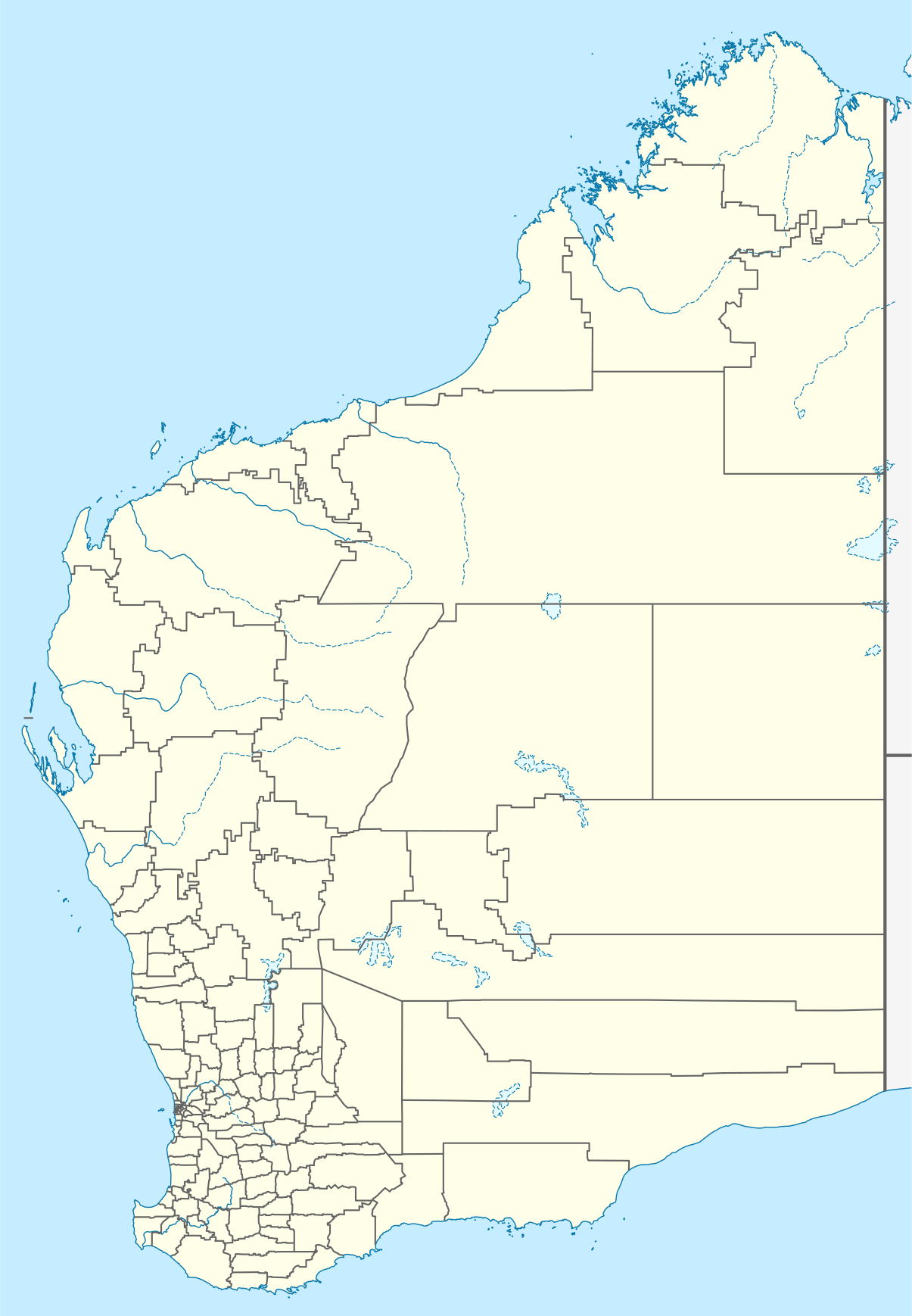
Mulan is a remote Aboriginal community of around 120 people in the Shire of Halls Creek, near the Northern Territory border. It is approximately 44 kilometres south-west of Balgo and close to Paruku (Lake Gregory).
Paruku lies where the Tanami and Great Sandy Deserts meet. The lake has deep cultural significance for Walmajarri custodians and provides important wetland habitat for birds and other wildlife.
The present-day community of Mulan was established in the late 1970s by Walmajarri people returning to Country near Lake Gregory. Mulan Aboriginal Corporation's own account describes the community's establishment following the purchase of Lake Gregory Station for its traditional owners in 1978.
The Tjurabalan native title determination was made in 2001. Paruku Indigenous Protected Area was also declared that year.
For a fuller account of Mulan's history, Country and community, please visit Mulan Aboriginal Corporation — About Us.
Mulan Aboriginal Corporation (MAC) is the community organisation supporting Mulan's residents and community-led programs. Its work includes improving local employment opportunities, housing, youth activities, care services, art and land management.
MAC's own Reimagining Mulan project began in 2024. Community consultation identified three priorities: jobs, youth and housing. The project works towards greater economic opportunity, healthier housing, preparing young people for employment and stronger local control over decisions and services.
With approximately half of Mulan’s residents under 21, youth activities are a major community priority. The program employs two Aboriginal youth workers from Mulan. Read more about the youth program →
Employment and training opportunities, Remote Jobs and Economic Development initiatives, and Housing for Health improvements are among MAC's areas of work.
Community activities include the Paruku Indigenous Protected Area rangers, Warruyanta Art Centre and Home and Community Care services.
Read about Reimagining Mulan · Explore MAC's programs
MAC is a registered Australian charity, classified as a Public Benevolent Institution, and endorsed as a Deductible Gift Recipient (DGR).
If you'd like to support Mulan's broader community-led work, please contact MAC through its own channels to ask about its preferred donation arrangements. Eligible gifts may be tax-deductible, subject to Australian taxation rules.
Donations to MAC are separate from WAssup. WAssup does not collect or manage donations for MAC.
Mulan Aboriginal Corporation reports that approximately half the people living in Mulan are under 21 years old. With the community's population estimated at around 120, that is roughly 60 children and young adults. This is an estimate based on MAC's figures, not a separate census count.
Mulan Aboriginal Corporation established its youth engagement program in 2025 with funding from the National Indigenous Australians Agency (NIAA). The program employs two Aboriginal youth workers from Mulan, supporting activities organised locally rather than brought in as one-off events.
MAC lists sporting and recreational activities, cultural camps, food security, work experience and life-skills development among the program's areas of work. The youth program sits alongside Mulan's broader priorities around local jobs, training and housing.
Music and recreation can give children opportunities to spend time together, dance, try something new, sing or speak into a microphone. These are ordinary activities, shaped by the young people and the workers who know them.
The videos that Mulan shared with WAssup show children involved in the Yapawurru Youth Program dancing in the basketball shed and interviewing one another. The activities belong to Mulan's existing youth program; the donated speaker and microphones are simply additional equipment for them to use.
Source: Mulan Aboriginal Corporation — Our Programs (Mulan Youth Program). The approximate number of residents under 21 is calculated from MAC's stated population and proportion.
The following videos offer a glimpse of Mulan, Paruku and life on Country for the Walmajarri people. They are publicly available on YouTube, with links to their original uploads.
Aboriginal and Torres Strait Islander viewers are advised that some of the following videos may contain images, voices or names of people who have passed away.
Choose Load video to connect to YouTube. Its privacy-enhanced player receives technical information when loaded. Each video also links to the original upload.
Listen out for “Muntu Paja Marrka Munku” (“Country Keeps Us Strong”), sung in East Walmajarri, in the making-of video.
Children at Mulan already have the Yapawurru Youth Program, its activities and local youth workers. WAssup's contribution was a portable speaker and two wireless microphones — equipment MAC can use where it fits.
In the footage Mulan shared, children dance to the “Cha Cha Slide” in the basketball shed, interview one another with the microphones and enjoy music together. It shows both sides of the kit: listening to music and giving people a chance to speak or perform.
The speaker can also be taken to other community activities and outings, including Paruku (Lake Gregory). MAC and the community decide how and when it is used. There is no requirement to send WAssup photographs, footage or progress reports.
“This is how I envisioned them being used.” — Scott Bibby, WAssup founder
As I said in my interviews with ABC Kimberley and Wangki Yupurnanupurru Radio, I want kids to be kids, to vibe together and simply have fun.
Seeing the smiles on the kids’ faces lets me know that what I’m trying to build is worth it.
© 2026 Mulan Aboriginal Corporation. The community footage and photographs in this WAssup video remain the copyright of Mulan Aboriginal Corporation and are shared with its permission.
Child safety and cultural protocols are among the most important parts of the WAssup 108 Speakers Program. Photos and videos are never a requirement. Mulan shared this footage with permission, and decisions about the equipment and its use remain with the community and Mulan Aboriginal Corporation.
Thank you to Mulan Aboriginal Community for sharing these moments with WAssup.
Mulan Aboriginal Corporation — community information, programs and contact details.
Mulan Aboriginal Corporation — Our Programs is the primary source for the youth-program information, its two local youth workers and the statement that approximately half of Mulan residents are under 21.
Mulan Community, Western Australia — Wikipedia. Selected background and geographic information has been summarised and adapted from the article. The adapted passage is shared under CC BY-SA 4.0. Changes include condensed wording and additional information from MAC's website. See the article history for contributors.
Western Australia location map by NordNordWest/Wikipedia (Wikimedia Commons), CC BY-SA 3.0 Germany; Mulan location marker added by WAssup. The adapted map is shared under the same licence.
Embedded YouTube videos remain the work of their respective creators and rights holders. Each video links to its original upload. No ownership is claimed by WAssup.